
The Frozen Shoulder
If you’ve been struggling with a stiff, painful shoulder that just doesn’t want to resolve, you may be dealing with a frozen shoulder, otherwise known as called adhesive capsulitis. It’s frustrating, interrupts sleep, and it can stop you from doing the simple things you love.
The good news? With the right diagnosis and care – especially physiotherapy, exercise therapy, and aqua therapy – your shoulder can recover. At BRH Physiotherapy in Johannesburg, we help patients every week regain movement, reduce pain, and get back to normal life.
Who Gets Frozen Shoulder?
A frozen shoulder usually affects people between 40 and 60 years old, with women being more commonly affected than men. You’re more at risk if you:
- Have diabetes, thyroid problems, heart disease, neurological illness (ie: Parkinson’s Disease) or autoimmune conditions (rheumatoid arthritis).
- Have had shoulder surgery or an injury where your arm was kept still in a sling.
If you’ve had a recent shoulder surgery or injury, contact us to prevent a stiff or frozen shoulder.
How Does Frozen Shoulder Happen?
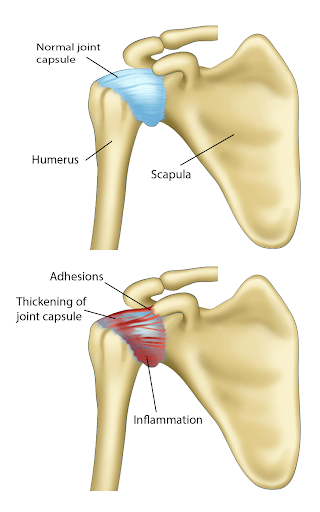
Your shoulder joint is surrounded by a connective tissue capsule. When an inflammatory incident occurs, this capsule becomes thick, inflamed, and tight. Scar-like tissue called adhesions can form, which lock up the joint. The result is a progressively stiff and painful shoulder.
Signs and Symptoms
Frozen shoulder usually happens in three stages:
- Freezing: Pain gets worse and movement becomes more limited.

- Frozen: Pain may ease, but stiffness is at its worst.
- Thawing: Movement slowly returns – but this can take months.
You may notice:
- A dull, constant ache in your shoulder or upper arm
- A sharp pain when moving the arm beyond its available range.
- Difficulty reaching behind your back or lifting your arm.
- Pain at night that keeps you awake.
If this sounds familiar, don’t wait, rather book a shoulder assessment with us at BRH Physios so we can diagnose it early.
How Is Frozen Shoulder Diagnosed?
A frozen shoulder can be identified when discussing your history and presentation of pain. We’ll talk through your history, check your movement, and rule out other causes of shoulder pain. After the initial assessment, we will send you for an X-Ray and ultrasound to confirm the diagnosis and ensure nothing else is at play.
Frozen Shoulder Treatment at BRH Physios:
Manual therapy
Gentle, hands-on treatment helps loosen up the joint and ease pain. We’ll guide you with stretches and mobilisation strategies to manage symptoms at home. We will discuss pain management techniques, sleep hygiene and ergonomics and work ergonomics in great detail to ensure pain relief.
Ready to get moving again? Book a physio session with us.
Exercise Therapy
Movement is medicine. We’ll create a personalised programme to help restore your shoulder’s flexibility and strength. This might include pendulum swings, assisted stretches, and progressive strengthening as your range improves.
Ask us about a home exercise program designed specifically for frozen shoulders.
Aqua Therapy in Johannesburg
Our warm-water, indoor aqua therapy sessions are especially helpful for a frozen shoulder. Not only does the water support your arm, but it also reduces pain and you can move more freely than on land. It’s gentle, safe, and effective.
Medical Support
Sometimes doctors recommend anti-inflammatory medication or cortisone injections. These options will be discussed, allowing you to choose the best route. Surgery is rarely a required course of action. Physiotherapy remains the most effective and long-term solution.
Let’s Get Your Shoulder Moving Again
A Frozen shoulder may take months to improve on its own, but with the right treatment, recovery happens much faster. At BRH Physiotherapy in Johannesburg, we combine physio, aqua therapy, and exercise therapy to help you get back to pain-free living.

Don’t wait for your shoulder to “just get better.” Book your consultation with BRH Physiotherapy today and take the first step toward recovery.