
Ankle Sprains: Why They Happen and How We Fix Them
We’ve all been there: you’re running, jumping, or maybe just stepping off a curb… and suddenly—ouch! Your ankle twists and before you know it, you’re nursing one of the most common sports injuries out there: the ankle sprain.
At BRH Physiotherapy, we see ankle sprains all the time, while they’re common, they can linger or worsen if not managed properly.
Let’s unpack what a sprain actually is, how it happens, how physio treatment gets you back to sport, and what happens if that ankle never quite feels “right” again.
What is an ankle sprain?
An ankle sprain is when the ligaments around the foot and ankle are stretched or twisted beyond their limit—sometimes even torn. The most common ankle sprain is the inversion sprain—that classic “rolled ankle” where your foot twists inward, overstretching the ligaments on the outside of the foot and ankle.
How does it happen?
- Sporting activities – landing awkwardly from a jump, quick side steps, or uneven playing surfaces.
- Everyday life – missing a step, tripping, or falling.
- Footwear and fatigue – high heels, worn-out trainers, or tired muscles that don’t protect your ankle like they should.
- A previous ankle sprain can make you susceptible to more sprains in the future if not managed correctly.
Primary Ligaments Involved
-
Anterior talofibular ligament (ATFL)

-
The most commonly injured ligament.
-
Stretches or tears when the foot is pointed downward (plantarflexed) and rolled inward.
-
-
Calcaneofibular ligament (CFL)
-
Often injured if the sprain is more moderate or severe.
-
Provides stability when the ankle is in a neutral or dorsiflexed position.
-
-
Posterior talofibular ligament (PTFL)
-
Rarely injured on its own.
-
Usually only damaged in very severe inversion injuries, often with ankle dislocation.
-

Diagnosing an ankle sprain
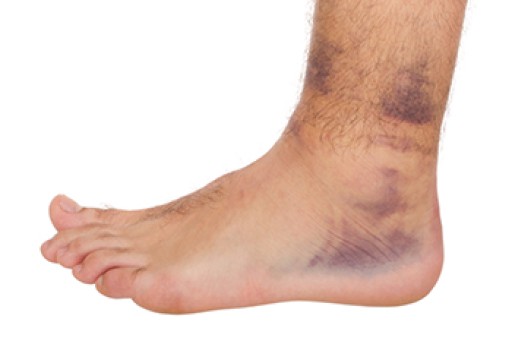 Diagnosing an ankle sprain
When you visit a physio, we’ll assess:
- Swelling and bruising
- Pain location
- Range of motion and strength
- Special tests to check the integrity of the ligaments.
- Special tests to rule out fractures or more severe injuries.
Sometimes imaging like X-rays or ultrasound is needed to confirm the diagnosis and/or rule out more other injuries that may be present.
How physio treats ankle sprains
Ankle rehab is a journey, and we tailor it to your recovery stage. Let’s break it down:
Acute Phase
This is when your ankle is swollen, sore, and you’re unable to walk properly. The length of this period depends on the severity of your ankle sprain.
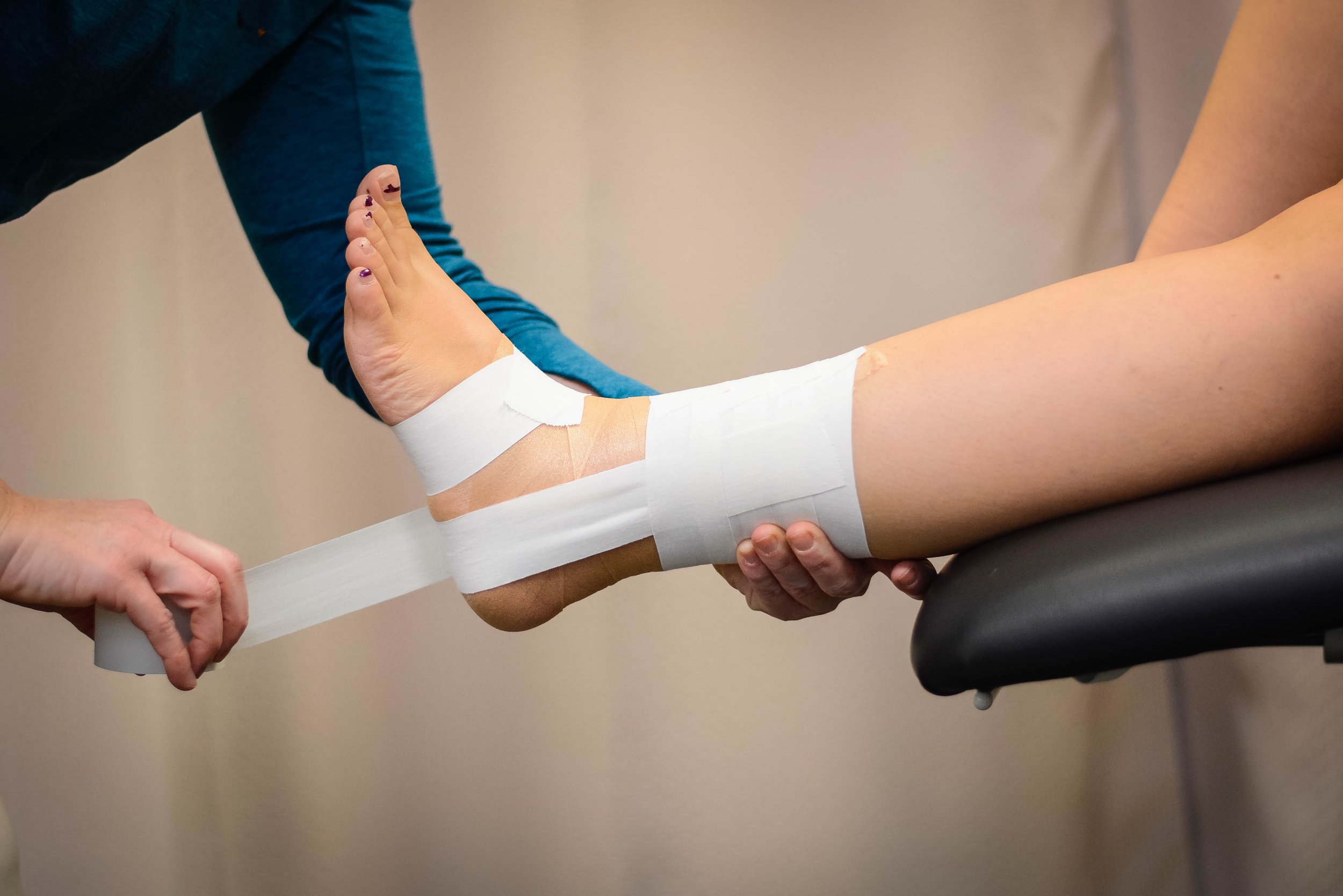
- Goals: Control swelling, protect the ligaments and prevent further injury.
- Initial management: RICE principles (Rest, Ice, Compression, Elevation), gentle pain-free movement, taping or bracing for support, and crutches if needed.
- Physio treatment: We use manual techniques and exercise therapy and advice to manage pain and promote healing.
Subacute Phase
The swelling is settling, but stiffness, weakness, and balance issues creep in.
- Goals: Restore movement, strength, and balance.
- Treatment: Progressive exercises to improve foot control, ankle stability, balance and proprioception will be included. Manual therapy will be used to manage joint and muscle limitations.
- Why it matters: This is where many people stop too early. If you skip this phase, you’re more likely to end up with chronic ankle instability and lack of trust in the ankle.
Return to Sport Phase

This is where we shift from “daily function” back to “sports performance.”
- Goals: Explosive strength, agility, and confidence in movement.
- Treatment: Sport-specific drills, plyometrics (hopping, bounding, cutting), sprint mechanics, and agility training.
- Testing: Before clearing you for sport, we’ll make sure your injured ankle is as strong, stable, and reactive as your good one.
What if my ankle still feels unstable?
Up to 40% of people with ankle sprains develop chronic ankle instability. This means your ankle feels weak, rolls easily, or gives you lingering pain.
Sometimes it’s not just the ligaments—your balance, proprioception, and ankle strength all play a role. Chronic sprains can even lead to early ankle arthritis if left untreated.
The good news is that physio is your best bet. We target all those weakness—balance retraining, proprioceptive drills, strengthening, and sport-specific progressions—to rebuild confidence and prevent future sprains from happening again.
Feel strong on your feet!
Ankle sprains might seem small, but if you don’t treat them properly, they can snowball into long-term issues. At BRH Physiotherapy, we’ll guide you through every stage: from a swollen ankle, to rebuilding your strength, and finally getting you back to your sport without fear of another sprain.

Do you want to return to sport stronger than before? Our physios are ready to get you there.
Visit us at www.brhphysios.co.za to book your appointment and get your ankles back in action.