
Understanding Tendinopathy
Tendinopathy is a term we use to describe tendon pain and dysfunction. In simple terms, it means that the tendon’s normal healing process has been disrupted. Instead of recovering smoothly, the tendon develops changes in its structure and function, which often show up as pain and reduced capacity, no known as a tendinopathy.
Most commonly, tendinopathy is linked to overuse—when the load placed on a tendon repeatedly exceeds what it can comfortably handle. This ongoing strain prevents proper repair and sets off a cycle of discomfort and dysfunction.
Clinically, people with tendinopathy typically experience three key features:
- Pain in and around the tendon, often aggravated by movement or activity.
- Reduced function, making everyday tasks more difficult.
- Exercise intolerance, where the tendon struggles to cope with the physical demands placed on it.
Healthy vs unhealthy tendons
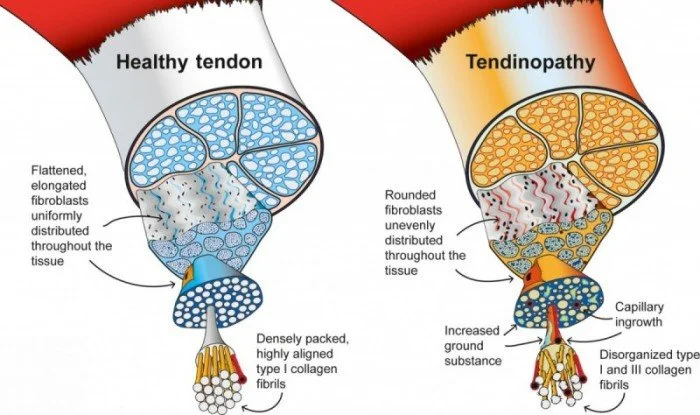
One of the reasons tendon injuries can be so frustrating is that tendons naturally have a low metabolic rate, meaning they don’t have the same strong blood supply and healing capacity that muscles do. This makes recovery a little more complex.
When a tendon is injured, several changes occur:
- The cells that maintain tendon health (tenocytes) don’t multiply as effectively as they should.
- The tenocytes themselves can develop structural and functional abnormalities.
- The tendon’s collagen fibres become disrupted.
- Instead of healthy collagen, the tendon starts to lay down more non-collagenous tissue, which isn’t as effective at handling load.
These changes explain why tendon injuries often:
- Take longer to heal than expected
- Can become chronic if not managed properly
- Lead to stiffness, ongoing inflammation, and less resilient tendon tissue
What Increases the Risk of Tendinopathy?
Several factors can make tendons more vulnerable to injury: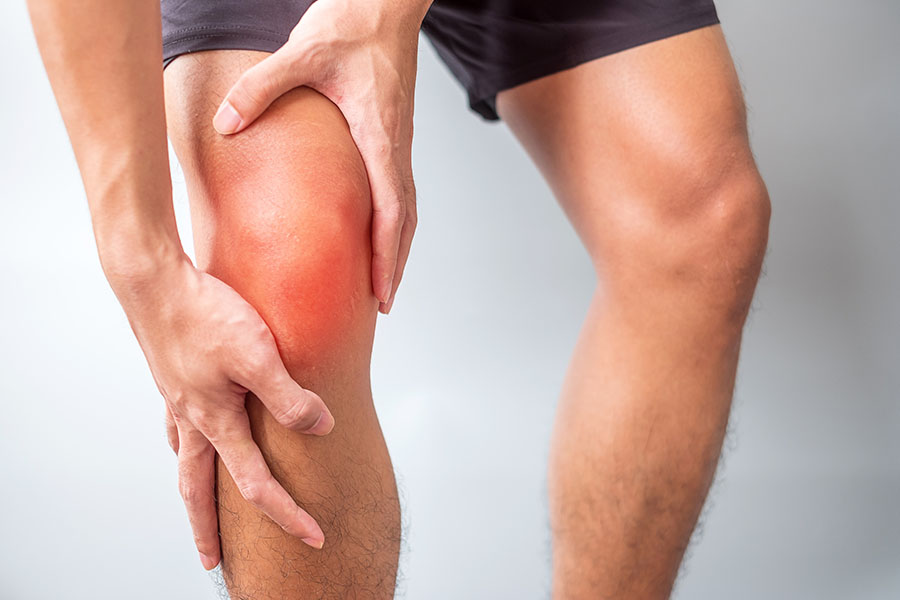
-
Overuse – repetitive strain and micro-tears from ongoing activity
-
Age – natural loss of elasticity and strength over time
-
Poor technique – faulty movement patterns or biomechanics
-
Sudden spikes in activity – ramping up intensity or duration too quickly
-
Inadequate warm-up – starting exercise without preparing the tendon
-
Environment – cold weather or hard training surfaces
-
Biomechanical issues – e.g., flat feet or leg length differences
-
Footwear – shoes that don’t provide proper support
-
Systemic conditions – such as diabetes or rheumatoid arthritis
-
Previous injury – a history of tendon problems increases future risk

How long do tendinopathies last?
Recovery often takes weeks to months, depending on the severity and how long the problem has been there. Some people notice improvements within 6–8 weeks, while more stubborn cases can take several months to fully settle. The good news is that with the right treatment plan — especially a structured loading program — tendons respond well and continue to strengthen over time. The key is consistency and patience, not quick fixes.
Goal of Physiotherapy
The overall goal is to promote healing, restore function, and prevent recurrence.
If this sounds like you, contact us to address your pain.
Physiotherapy Management
Recovering from tendon pain isn’t about quick fixes — it’s about guiding the tendon through a structured rehabilitation process. Here’s how we approach it in physiotherapy:
Assessment: 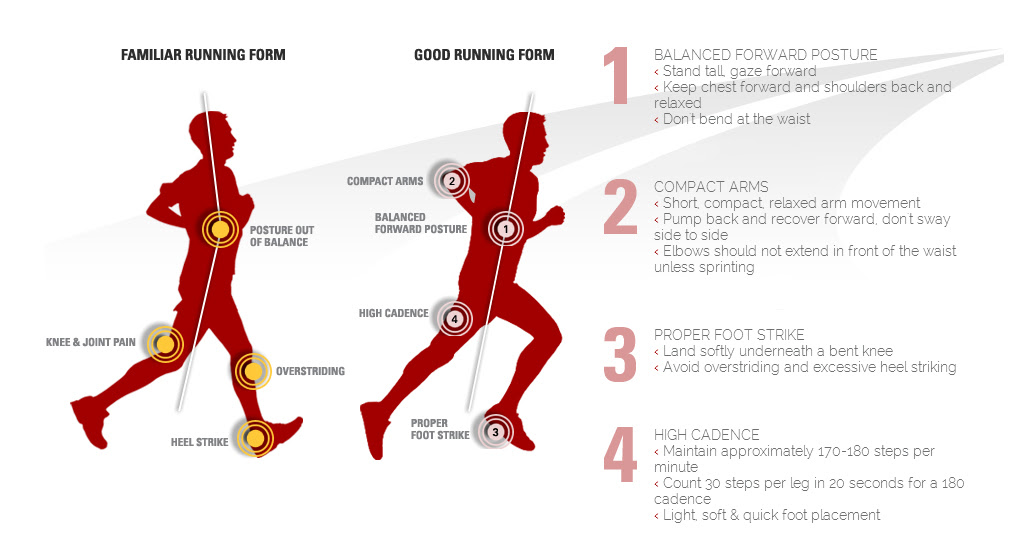
The first step is always a thorough assessment. We look at the tendon itself, but also at the bigger picture — factors like your activity levels, training load, biomechanics, and lifestyle. This helps us understand what’s driving your tendon pain and where to focus treatment.
Education:
We spend time explaining what tendinopathy is, how tendons heal, and why certain treatments are important. When you understand the “why,” you’re more confident and consistent in your rehab journey.
Modalities:
Sometimes, we use therapeutic tools to support recovery. Ice or Shockwave Therapy can help reduce pain and stimulate healing. In

some cases, inserts, cuffs, or supportive strapping are used to offload the tendon and give it the right environment to recover.
Activity Modification:
Relative rest is adopted which is about reducing or adjusting the movements that overload the tendon. We help you find ways to stay active and maintain fitness without worsening your symptoms.
Exercise Therapy:
This is the cornerstone of tendon rehab. We guide you through a progressive programme that often starts with eccentric (lengthening) strengthening and gradually builds to more functional, load-bearing exercises. Flexibility and mobility work are also included to restore normal movement.
Hands-on physiotherapy techniques can help relieve pain, improve circulation, and ease stiffness around the tendon. This also helps to ensure the surrounding structures are working effectively.
Biomechanical Assessment:
Sometimes tendon pain is made worse by the way we move. We’ll look at your posture, complete a running assessment or look at walking patterns, and even footwear. Correcting biomechanical issues reduces unnecessary strain on the tendon and improves long-term outcomes.
Return-to-Activity Planning:
One of the most important stages is getting you back to the activities you love. We structure a gradual return, increasing load and intensity step by step to prevent flare-ups and build resilience.
Regular Follow-Up:
Tendon rehab is a process, not a one-off session. We schedule check-ins to monitor your progress, adapt your programme as you get stronger, and keep you on track toward full recovery.
Take the First Step Toward Recovery
Tendinopathies can be frustrating and it doesn’t settle with rest alone. But the good news is that tendons are adaptable. With the right guidance, structured loading, and a clear plan, they can remodel and regain their strength.
At BRH Physiotherapy, our goal is not only to reduce your pain but also to restore your confidence in movement and help you get back to the activities you enjoy most. Whether it’s sport, work, or everyday life, recovery is possible — and we’re here to support you every step of the way.
